


Scroll down for a first-look review of Tacos Domingo, the latest Mexico City import to land in Manhattan. Briefly: The bean tacos are quite good! But first…
Who just bought Eater?
Penske Media, the sprawling conglomerate behind SXSW, the Golden Globes, and Rolling Stone, will purchase Eater and the other remaining assets of the company once known as Vox Media.
It’s the end of an era for the publication that was my professional home for nearly a decade.
Terms of the sale were not disclosed, according to Variety, which is also owned by Penske Media. The other half of Vox, including New York Magazine, Vox.com, and the podcast network, had already been sold off to James Murdoch for $300 million.
The deal, which includes The Verge and SB Nation, makes Penske “the world’s largest digital publisher,” according to a press release. Variety reports that Eater and the other brands “will continue to operate autonomously.”
Penske Media also owns Robb Report, a luxury lifestyle publication that, in addition to covering Bentleys, Aston Martins, and lavish maritime travel (they literally have a yacht subhead on the homepage), also reports on fancy restaurants and limited-edition whiskeys.
Eater has undergone numerous pivots and multiple force reductions in recent years. The food and beverage site shed scores of journalists, including critics, feature reporters, and editors, as it reorganized to produce a variety of newsletters and short dining briefs for a smartphone app.
I’ll refrain from too much commentary since we don’t know what changes will come as of yet. But I hope — and I realize hope isn’t a strategy — that this new partnership builds a more stable home for all my amazing friends who still work at Eater. The good folks who keep that site running deserve so much more than a constant cycle of layoffs and restructurings. They deserve to do what they do best: produce breaking news reports, timely features, and informative videos. And Penske should realize that the most important thing they’re buying isn’t a brand, but the journalists who power that seminal food and beverage site every single day. Without them, without those journalists, there is no Eater.
It’s also worth being clear-eyed about these moves. Penske, like so many other digital publishers coping with the decline of search traffic, carried out its own series of layoffs at Rolling Stone, Variety, and elsewhere last year. Corporate parents typically strive to find efficiencies among acquired publications and existing brands when facing economic headwinds.
And finding efficiencies usually carries a human cost.
Which chefs and restaurants won at The James Beard Awards?
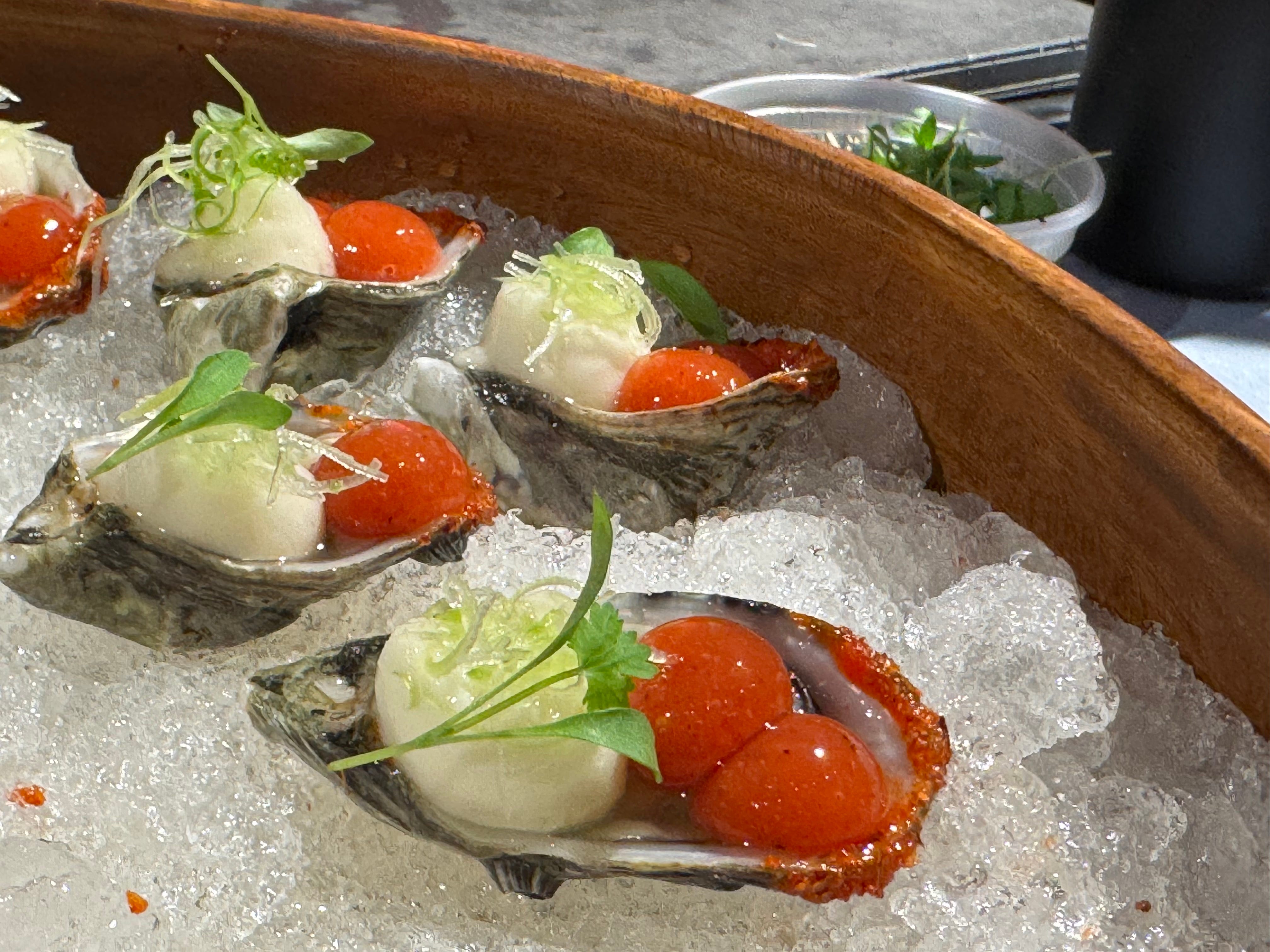
The James Beard Awards, a duo of annual galas for restaurants, chefs, cookbook authors, and journalists, took place in Chicago over the past seven days.
It was pretty fun!
I got to spend some time chatting with food writers I don’t see too often IRL — like Amy McCarthy, Jaya Saxena, and Ashok Selvam of Ravenous, Daniel Hernandez of The Los Angeles Times, and Hana Asbrink of Bon Appétit!
And I swung by Portillo’s and Asador Bastian for some Chicago beef!
Maybe I’ll write about those meals soon.
But back to the Beards, which I should contextualize, in case you’re not too familiar: While consumers look to, say, restaurant reviews or Michelin stars for decisions on where to eat, the Beards are more like the Grammys or Tonys. Things kick off with an annual call for nominations. Judges then suss through the selections. Everyone dresses up at the ceremonies. Big-deal presenters announce the prizes by opening up sealed envelopes. And the winners give speeches in front of their excited peers before music plays them off. Naturally.
Here’s who came out on top at the chef and restaurant awards on Monday:
Outstanding restaurant: Kalaya, one of the country’s fanciest and most celebrated Southern Thai restaurants. Been dying to eat here for a while; I mentioned the famed tom yum soup in my Chalong review!
Best new restaurant: Lei, Annie Shi’s very good wine bar in Manhattan’s Chinatown.
Best chef, California: Dave Beran, who serves a $295 tasting at Seline in Santa Monica! I dined well at Beran’s more affordable Pasjoli a few years back!
Best chef, Mountain: Yuan Wonton, Penelope Wong’s acclaimed wonton shop, born from a humble food truck.
Best chef, New York: Meju, Hooni Kim’s Queens fermentation spot that earned a top five spot on my colleague Ligaya Mishan’s Top 100 restaurants list.
Julia Moskin has the full report over The New York Times.
The Lo Times is a James Beard Award-winner!

The Beard Foundation also hosted a separate food media ceremony on Saturday at The Art Institute — my favorite museum in America!
And The Lo Times took home a medal!
But first, a few observations:
I’ve always found the James Beard Media Awards to be particularly fascinating and inspiring. Imagine if the Oscars celebrated not just filmmakers and actors but the journalists covering them as well! That’s actually not a bad idea. Like, how about an Academy Award for Manohla Dargis’s epic takedown of “The Polar Express” by Robert Zemeckis?
Seriously though, it’s really quite amazing when the Beards end up highlighting the very work of critics writing tough (but fair) things about some of the restaurants regularly up for top awards. It reminds us that criticism and celebration can exist in the same world.
No, the media ceremony doesn’t necessarily generate the same type of attention as the chef and restaurant gala, and I suppose that makes sense. Folks tend to get more excited about eating at restaurants than contemplating the folks who write 1,200 word reviews about those institutions! But since I’m one of those folks who writes reviews, and since I do get super excited about reading that latest chef profile or personal essay, let me mention some of the media winners:
Craig Claiborne, criticism: Ellen Cushing of The Atlantic for her column on Elon Musk’s Tesla diner, among other pieces.
Personal essay with recipes: Hali Bey Ramdene of Bon Appetit on blueberry oatmeal and what it means “to become a mother while grieving your own mom.” It’s part of the publication’s ongoing “Fourth Trimester” series on postpartum eating, cooking, and living.
Foodways: Ahmed Ali Akbar, for his Chicago Tribune story titled: “The hunt for the bean pie street sellers of legend, and how this dessert is a symbol of liberation for many Black Muslims.” Listen to his beautiful acceptance speech via the author’s newsletter, Rad Brown Dads 2.0!
Jonathan Gold Local Voice Award: Stephanie Breijo of the Los Angeles Times for a series of columns, including one on the Eaton Fire and another titled: “These street vendors used their aguas frescas to fight tear gas at anti-ICE protests.”
Dining & Travel: “Hong Kong Looks to Reinvent Itself,” by Francis Lam, for Condé Nast Traveler.
Investigative Reporting: Robert Lopez of Capital & Main and The Los Angeles Times on the exploitation of child farmworkers.
Profile: “No Papers, Just Peaches,” a profile of a Pakistani frutería clerk in Barcelona, which you can read here on Substack! By Sithara Ranasinghe, with editing by my former coworker Jesse Sparks!
Columns and newsletters: Ryan Sutton of The Lo Times (!!!). This was for my column on the vulnerabilities of immigrant restaurant workers, my explainer on the SNAP funding crisis, and my essay on campus Iftar dinners and student deportations.
The Beard Foundation has been generous about recognizing the work of independent journalists and small-scale publications, with awards having gone to Tanya Bush’s Cake Zine, Hannah Raskin’s The Food Section, and Gary He’s self-published and self-funded McAtlas. And so it feels quite nice to see The Lo Times entered into that list!
Indeed, some of the most exciting and relevant food journalism right now is getting published not just from mainstream outlets — again, I’m so lucky to be part of that side of the equation — but also from independent publications that didn’t even exist three or four years ago. Some of the young publications that I’m thinking of — and that I mentioned in my speech — include Ravenous (by some ex-Eater folks), Beyond Buerre Blanc (by Kirstie Kimball), The Sweethearts (by Charlotte Druckman and Mia Winston), and Sweet City, by Mahira Rivers, my fellow contributing critic at the NYT.
It’s a wild time to work as an independent journalist, in this era when holding power to account during the day precedes long nights of figuring out how to pay for healthcare. But there’s nothing else I rather be doing right now, and it warms my heart when I see so many other journalists continuing to write and publish, no matter what we’re all up against.
The importance of nominations
I’ve riffed on this theme before, but I feel like this is a good time to do it again.
Nominations have always mattered more to me than whoever ends up winning at a given awards ceremony.
Sure, it’s thrilling to see M. Gessen take home a deserved Pulitzer for opinion writing on authoritarianism. But I like to think the prizes are entirely more meaningful when you see Nicholas Kristof and Gustavo Arellano alongside Gessen as finalists, opining on the dismantling of U.S. Aid and the carrying out of mass deportations.
Awards derive much of their legitimacy not because of who ends up on top, but because of which films, songs, or feature stories the judges put in conversation with one another. Awards matter not because of a single victor, but because of the collective themes that voters seek to highlight. Indeed, you can see one common theme emerge very clearly when you read Kristof, Arellano, and Gessen.
And so on that note, I’m so deeply grateful that my essays on the immigration crackdown and the food aid crisis were named alongside the work of Saveur and Civil Eats. You can detect one common theme in all our work, too. So please spend some time with Shane Mitchell’s writings about a mutual aid group delivering groceries to families impacted by ICE. And click through to the work of Rebekah Alvey, Brian Calvert, and Lisa Held, who published columns on SNAP funding and ICE raids targeting farm and food workers.
The true honor of awards like these is knowing that we’re all working on this together. We need to. Because these days, this is a lot.
More CDMX tacos! More steak tacos!
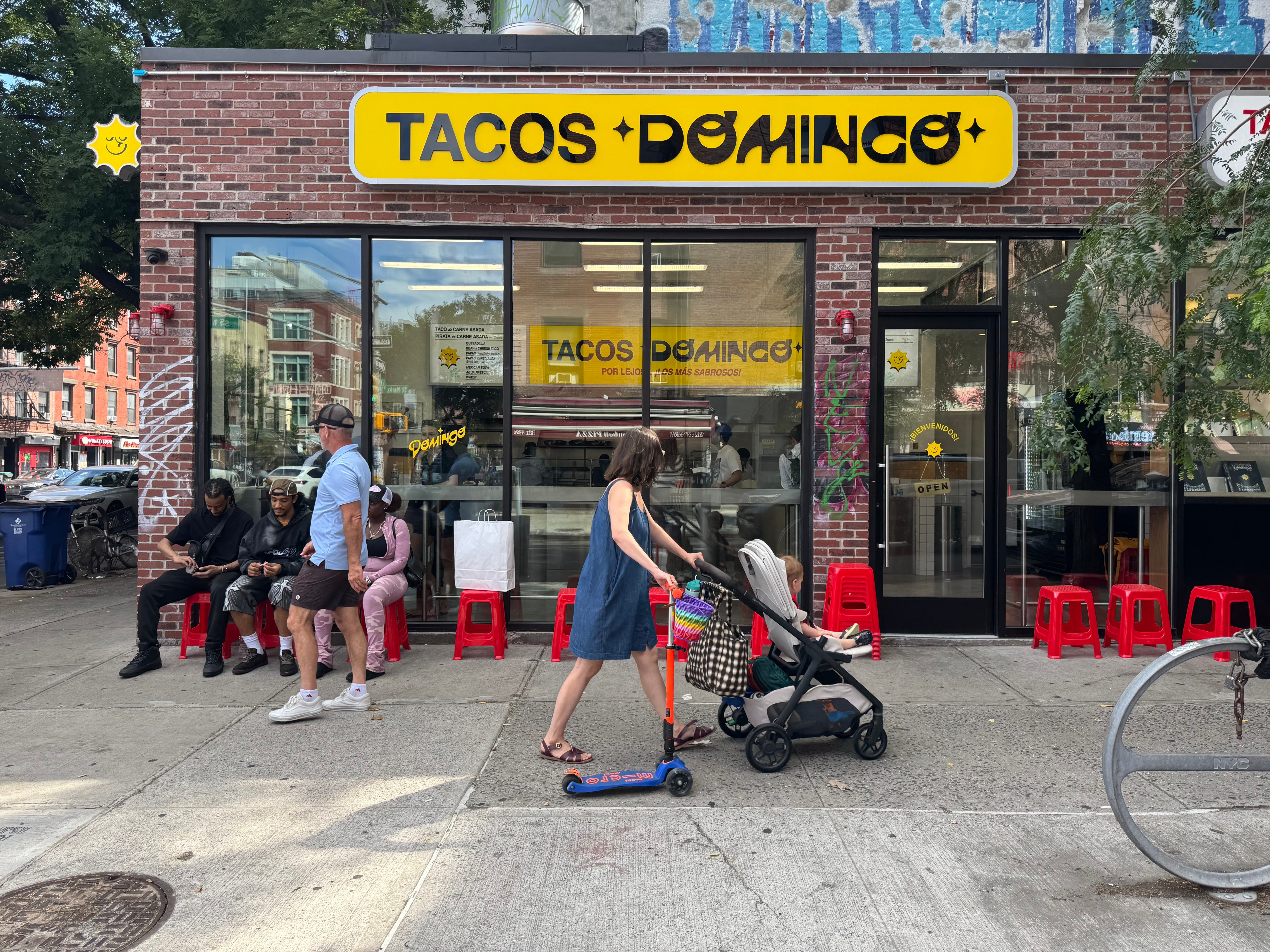
The steak taco is the quintessential New York taco of the current era. And Norteño fare — including lush flour tortillas — is booming throughout the city at places like Border Town, Vato, Cuerno, and elsewhere.
This all explains why the folks behind Tacos Domingo, a small Northern Mexican chain with locations in CDMX and Monterrey, have set up their first stateside outpost in Manhattan’s East Village.
The airy space sits at the corner of St. Marks and First Avenue. Light pours in through giant windows. Stainless steel counters function as standing-only tables. And ordering works more or less the same way as it does at Los Tacos No 1.
You pay first, then hand a receipt to the taquero.
Domingo only offers two tacos at the moment: carne asada or bean & cheese.
How are they?
Well, steak tacos are a competitive category in New York these days, and I’m sorry to say that Domingo’s aren’t quite ready for prime time, based on an early visit.
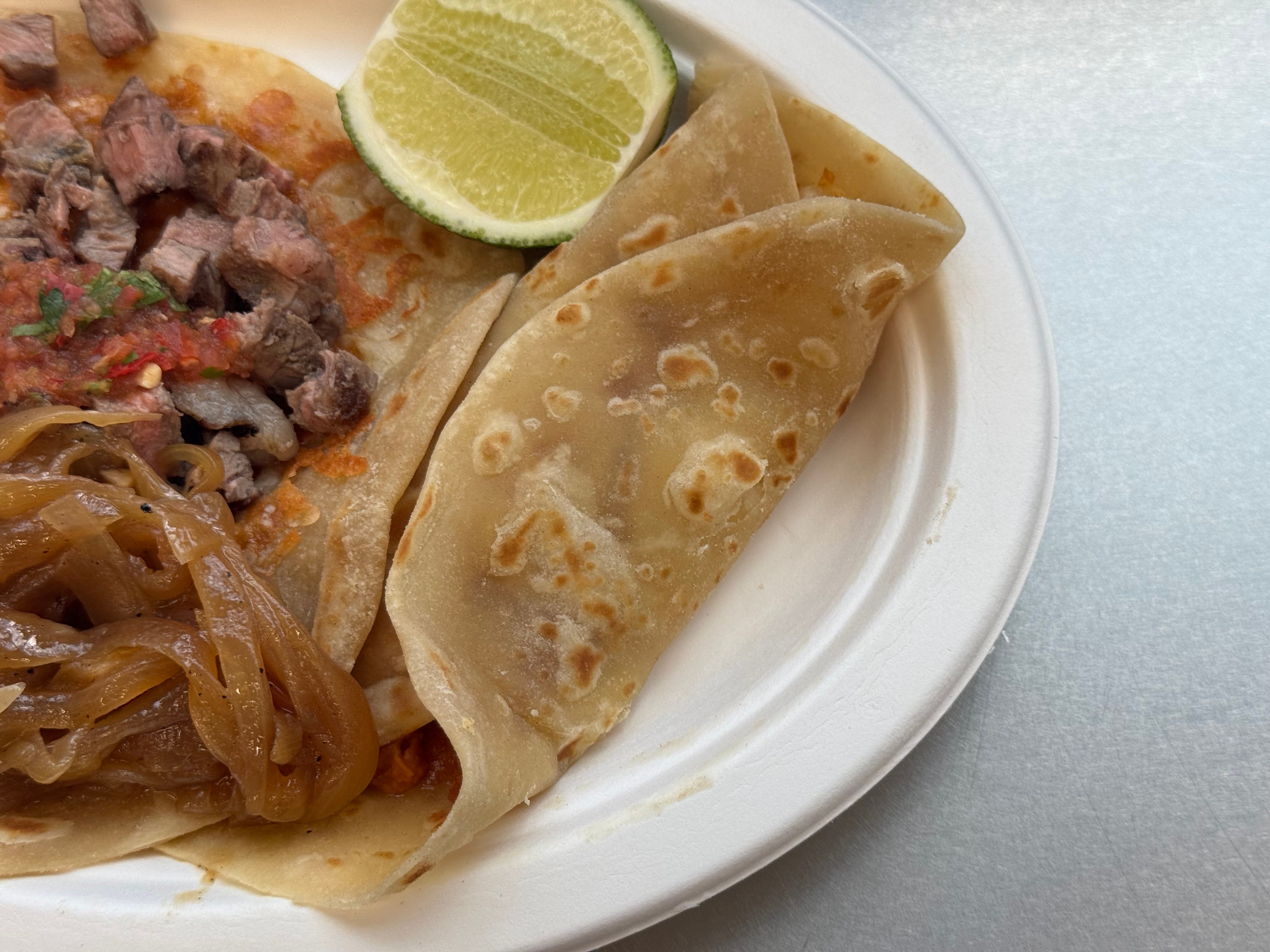
While venues like Esse or Santo offer high-quality beef with impressive marbling and proper Maillard char, Domingo’s steak had a distinct commodity twang. The cubes of meat, scooped out of a metal tin, packed under-rendered fats and little beefy char. Really, there’s not a lot of flavor happening here.
But the good news — again, from an early visit — is that the bean and cheese tacos are quite special, thanks in no small part to the warm tortillas, all splotched over with handsome leoparding.
Domingo, like other Norteño spots, uses lard in its dough, and the result is another very good flour tortilla for our city. It’s a burnished affair that’s much puffier than the diaphanous specimens at Border Town, but not quite as thick as the naan-like varieties at Los Burritos Juárez. The texture is springy and flaky, like a good paratha. A layer of griddled cheese fuses itself to the dough, while an orange layer of spiced frjioles sits atop.
Modest portioning and smart ratios are what makes this taco so good. The beans don’t overwhelm the tortilla any more than a schmear gets in the way of a bagel. This is a taco de frijoles as a study in balance; all the ingredients — including a proper hit of chiles — come through cleanly. This is a delicious and crushable taco. Cost: $5.
I’ll be back here soon to re-try the carne asada, available for $7.95 alone, or $10.95 as a pirata — which sports same layer of griddled cheese you get on the bean taco. Quesadillas and fried baby potatoes are also available. 131 First Avenue, East Village
Also check out Robert Sietsema’s New York for his own early review of Tacos Domingo! Siestema likes the steak tacos more than I do, but we agree on the deliciousness of bean varieties!
Ryan!!!
Ryan Sutton is a contributing restaurant critic for The New York Times and editor of The Lo Times. You can read starred NYT reviews by Mahira Rivers and Ryan Sutton right here. And you can read “Where to Eat” columns by Luke Fortney and Becky Hughes over here.
p.s. Here’s a nice post from the good folks at Cake Zine about their Beard Award!
HUGE congrats on the win, Ryan!! So well deserved ❤️ and I’m right there with you hoping the Penske acquisition means eater survives in a good version of itself
Thank you for using Indian breads as the benchmark to explain the textures of the tortilla spectrum 😂 thanks to your brain & words, it’s a wonderful unified world we can live in momentarily