


On Noma
Alright.
Last Saturday, Julia Moskin of the New York Times published a detailed story on past abuses by one of the world’s most famous chefs: Noma’s René Redzepi. The investigation was based on interviews with 35 former employees. A key graph:
“Between 2009 and 2017, they said, he punched employees in the face, jabbed them with kitchen implements and slammed them against walls. They described lasting trauma from layers of psychological abuse, including intimidation, body shaming and public ridicule. Mr. Redzepi, they said, threatened to use his influence to get them blacklisted from restaurants around the world, to have their families deported, or to get their wives fired from their jobs at other businesses.”
Moskin’s reporting came as Noma prepared to open its 16-week Los Angeles pop-up, priced at $1,500 per person.
American Express and Blackbird pulled out as sponsors in the aftermath, as Kristen Hawley reported for Expedite. Jenn Harris, a food critic at the Los Angeles Times, wrote about why she wouldn’t be dining at the Noma pop-up.
One Fair Wage and Jason Ignacio White, former head of Noma’s fermentation lab, organized protests outside the Silverlake estate where the pop-up is being held, as Meghan McCarron of the NYT reported.
And Caper’s Chris Crowley wrote about how the Danish media were responding, passing along the following machine-translated quote from Weekendavisen’s Christian Bennike: “It is the biggest cultural scandal in Denmark in decades, because Redzepi is the biggest Danish cultural personality in the last 20 years.”
Last night, four days after the original Moskin report, Redzepi announced in an Instagram post and in a video that he was stepping away from Noma.
The video clip “included no talk of divestment, amends, or the slightest hint at who’s really in charge now,” Hugh Merwin wrote for Grub Street.
It’s Thursday, 12 March 2026. Like so many other folks, I’m finding it a little tough to spend too much time thinking about where to get a good bite to eat right now. So let me go on for a little bit longer. Then we’ll talk about the cost of dinner.
Shortly after Moskin’s initial Noma report went out, a hospitality professional DM-ed me about their tough experiences working with another acclaimed fine-dining chef. I her message sink in. And I spent some time thinking about Jenn Agg’s Instagram post about fellow chefs posting supportive notes below Redzepi’s social media apology.
Tejal Rao, chief restaurant critic at the NYT, dedicated a full column to Noma today. She suggested that the institution, which had a broad influence on how food looked and tasted throughout restaurants, failed to apply “some of its creative juice to reimagining and reshaping the toxic kitchen culture familiar to so many cooks…”
Here are two key sentences from that Rao column, which I hope you read in full:
“Mr. Redzepi says he has changed in recent years, but from the comments posted under a recent apology, it seems that plenty of food professionals shrug off bullying in the kitchen or agree that it can be motivating, even necessary — the only way to get the best out of the people who work for you, the only way to get to the top.
That simply isn’t true, and one of Noma’s greatest flaws is its passing down that idea to the thousands of cooks, many of them unpaid, who made pilgrimages there to learn from the best.”
Let’s Talk About the Cost of Dinner Out, Again
The Iran War has translated to higher costs at the pump for Americans. Gas prices are currently averaging nearly $3.60 per gallon across the U.S., a 20 percent increase in just 11 days, Reuters reports. That means a lot of folks are getting squeezed.
So I reckon it’s a good time to talk about restaurant price hikes.
Let’s get to it.
Eleven Madison Park’s $1,000 dinner for two!
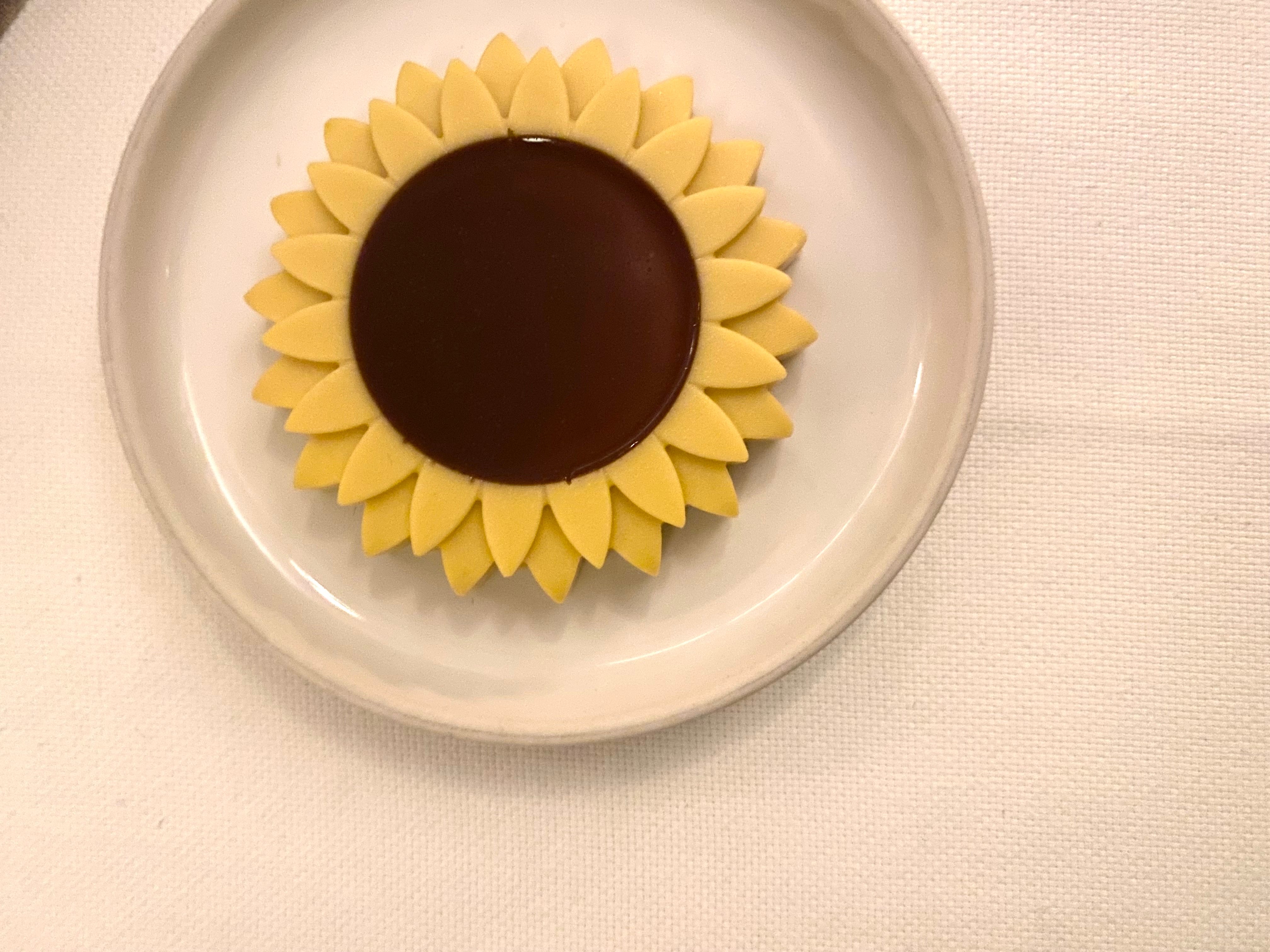
You’ve heard this story before, but it’s one worth repeating. Some of New York’s most expensive fine-dining spots have become even more expensive, yet again.
Eleven Madison Park, a restaurant with a remarkable track record of overhauling itself every few years (pour one out for the old three-card monte homage), hasn’t raised prices in roughly four years.
In 2022, during the early days of the plant-based menu, Eleven Madison bumped up the tasting menu to $365 as part of an effort to raise wages — amid reports of low staff pay.
Well, prices are going up again, less than a year after Humm announced that he’d be ending the restaurant’s vegan-ish phase by reintroducing select animal proteins.
More specifically: Eleven Madison has hiked the tasting menu by twenty bucks to $385. That new price will go into effect starting in April. That means dinner for two will run $992 after tax and tip. A thousand bucks, before wine.
Yep.
Add on optional pairings for two and you’ll be at $1,495. The restaurant did not respond to a request for comment.
Eleven Madison no longer offers its shorter six-course tasting menu, but a bar menu is still available for $225. Reservations are prepaid and non-refundable. 11 Madison Avenue, Flatiron
I don’t write about fine dining tasting menus too often these days.
Don’t get me wrong; the length of a good menu doesn’t bother me too much, just as I don’t mind the three-hour run time of “One Battle After Another.”
But when I have a few extra bucks, I generally prefer to work my way through one of the city’s myriad small plates places, venues where I can exert control over my culinary and financial experience during the meal itself. By ordering more.
Or by ordering less.
That’s entirely more preferable to dropping $400 on a pre-paid reservation 13 days out, which is the precise opposite of having control over what I choose to put into my stomach.
But that’s just my off-the-cuff take. For longer inquiries into the State of the Tasting Menu, spend a few minutes with Matthew Schneier of New York Magazine, or with Jaya Saxena, writing for Slate (“Who Is the Tasting Menu Even For Anymore”).
Aska is nearly $1,000 for two these days
I gave a proper rave to the Nordic spot in Williamsburg spot during my Eater days, due in no small part to the type of funky flavors that don’t typically find their way into polite fine-dining palaces. I haven’t been back in quite some time, but I’ve heard good things and I’m curious to see how the restaurant has evolved!
That return visit will be more expensive now.
Aska in recent months bumped up its menu price by $50 to $375. The Swedish-born chef, Fredrik Berselius, told me via text that costs are “rising in basically all areas of the business. Every line item going up to some degree,” he said.
That means dinner for two will now run $967 after tax and tip, but before wine. Add on optional pairings at $250 and you’ll be at $1,611 for two.
Reservations are prepaid and non-refundable, though transfers are permitted with a fee. 47 South Fifth Street, Williamsburg. NA pairings are $150.
Some of New York’s priciest tasting menus….
An $850+ dinner for two without drinks — which often translates to $1,000 after a few glasses of wine per person — is a heck of a thing.
But it’s far from unusual in New York.
Here’s what you’ll spend on some of the city’s priciest tasting menus. I’m excluding sushi and kaiseki spots to keep this list shorter and because I might have a few words to say about pricing at those spots soon enough.
The prices below are reflective of tax and tip for two, unless service is already included. The prices in parentheses are the “published” menu prices for one.
Per Se Evolution: $2,014 ($925 for one)
Jean-Georges ten-course menu: $1,026 ($398 for one)
Eleven Madison Park: $992 ($385 for one)
Brooklyn Fare: $992 ($385 for one)
Aska: $967 ($375 for one)
César: $949 ($368 for one)
Per Se regular menu: $925 ($425 for one)
Atomix: $922 ($385 for one)
Le Bernardin: $902 ($350 for one)
Jungsik: $863 ($335 for one)
A few of these spots offer shorter and cheaper bar menus. Le Bernardin serves a four-course menu for $218. Jean-Georges also offers a six-course menu for $238.
Regular price hikes are common at any given restaurant, as venues cope with rising costs related to real estate, food, utilities, retaining talent, and minimum wages that (justifiably) keep going up.
Yesterday’s U.S. Consumer Price Index showed that food prices — at home and at the grocery store — were a top driver of inflationary pressures across the country.
The Iran War could push up food prices even further as tight oil supplies impact shipping costs.
But price hikes at ultra-fancy spots are in a class of their own. When you’re pushing up the cost of a dinner by $100 or more for a two-top, you need a particularly willing and well-heeled consumer. That’s all the more true when a meal already runs $850.
That is to say: These steep increases suggest that fancy spots are confident enough in their ability to keep attracting enough wealthy residents and destination diners. A $50 per person price hike at a posh tasting menu joint won’t even put a dent in the bank account of someone earning over $450,000 a year, someone who doesn’t have to worry about when their own rent goes up by a few hundred bucks every year.
Meanwhile, a $2 increase in the price of an egg sandwich at a diner can be a more complicated thing to pull off.
It’s all part of the K-shaped economy, where the rich get richer and keep spending accordingly, while lower-income Americans and small business owners keep getting pinched.
Two budget tasting menu price hikes: Corima and 63 Clinton
More affordable-ish splurge restaurants — the kind that cash-strapped gourmands might save up for — are hiking up their prices too….
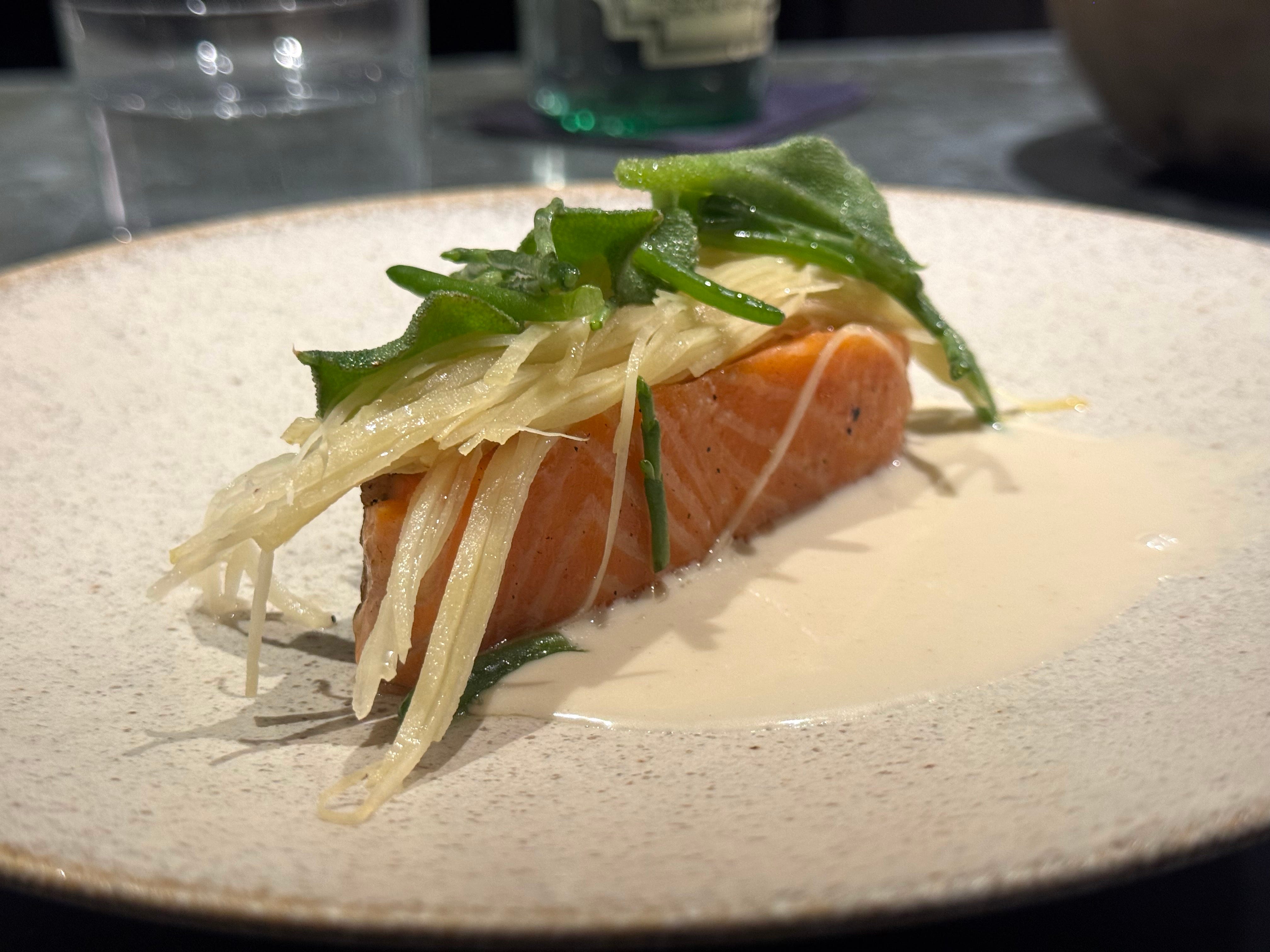
Corima by Fidel Caballero and Sofia Ostos serves one of the city’s few (or only?) Modern Mexican tasting menus. The bread course — a stretchy flour tortilla — tips its hat to Sonora and Chihuahua.
When I first wrote up Corima two years ago, the tasting ran just $98. It was one of New York’s best set-menu deals. That offering eventually hopped up to $125 last year.
And as of this February, it jumped to $140.
Ostos told me via email that the new price was driven by continually rising food costs, but she also added the following:
Although raising the price is never something we want to do, it reached a point where it became necessary in order to continue operating in a way that aligns with our values. It was especially important for us to ensure we can maintain fair wages for our team, who are a huge part of what Corima is and the experience we strive to provide to our guests every night. Maintaining that balance between supporting our team while continuing to source and cook at the level we believe in, was the primary reason behind the adjustment.
Is Corima it still worth it? Yes.
But if I can be more specific: My good colleague Ligaya Mishan, chief restaurant critic at the New York Times, found more excitement outside of the formal tasting menu in her two-star review. Caballero’s “à la carte dishes are just as smart and intricate but more expansive, at times madcap and, frankly, fun,” Mishan wrote.
I agree with that take! Three Allen Street, Lower East Side
I finally got around to trying 63 Clinton by Samuel Clonts last year, a tasting menu spot that nods to the American Southwest. The best course was the first, a breakfast taco for the ages. Trout roe sat next to a hash brown on a plush flour tortilla. The price of dinner was $112, before supplements.
Earlier this year, that tasting jumped up to $130. The current menu still highlights the breakfast taco, but I’m very curious about the newest dessert: a Choco Taco with key lime and brown butter! 63 Clinton Street, Lower East Side
I thought today would be a good day to do a newsier post.
If you’d like to read a restaurant review, check out my two-star take on Rice Thief in Long Island City. I’ll likely have more to say about that review and about raw crabs throughout the city in the coming weeks.
More soon,
Ryan!!!
Ryan Sutton is a contributing restaurant critic for The New York Times and editor of The Lo Times. You can read starred NYT reviews by Mahira Rivers and Ryan Sutton right here.
This post has been updated to include the $398 menu at Jean-Georges. I’ll continue to update The Tasting Menu Index as new prices and offerings come in! (17 March 2026).
For some previous thoughts on the cost of dining out:
We're Getting Priced Out of the Restaurants We Love

Please enjoy this special feature on the high cost of dining out. To unlock full access to The LO Times, including restaurant reviews and cheat sheets for dining out — like The Splurge List, and another big guide coming out next week — consider becoming a subscriber!
For Corima to almost offhandedly assert that its rising costs are going toward food quality and the fair compensation of its employees is both a total layup shot for a high-end establishment like this and also an extremely low bar-- that isn't to knock their team in the least, it's exactly what I want to hear from a restaurant and I don't need a three paragraph essay from the head chef to prove they're being honest, I need results... and by all accounts their team seems entirely sincere about creating a workplace that respects all and and their food quality hasn't been compromised as a result. So yea, no knock on them specifically...
More to say that its clearer than ever that tactful PR lingo like this is just a first step and so I'm grateful for food writers (this one and others) for holding those at the top to a higher standard and making sure 'ethics in food' includes goes beyond the sourcing of ingredients and using every part of the cow.
I don't work in food but I do have a unionized service job at a highly respected art-house theater, the kind that makes its money on films eschewing everyman struggles and proceeds to moan about paying its employees a fair wage. So in that light I'm more than grateful for the sort of watchdog reporting and vigilance that has allowed my team to fight for a modest salary that just barely (ha! ugh.) pays for my rent.
My rule is that if the meal is over $300, it has to be a little bit life changing or it has to make me feel something. Like do I want to go to Alinea when I'm in Chicago? No. But will you remember it? Yep. I open my memoir with EMP because to me it always seems forgettable on everything but service. I can remember the flavor profile of most dishes at 3 starred restaurants on memory, but not EMP. My Michelin star hot take is that if a restaurant has a star under $200, it is often more memorable than over it, and it's how I guide people most of the time.